

Types of Refrigerants
Refrigeration is a silent workhorse of modern life. From the freezer that stores your Sunday roast to the massive chillers that keep supermarkets stocked with fresh produce, the technology relies on a family of chemicals known as refrigerants. Over the past decades, the UK has witnessed a dramatic shift in the types of refrigerants in use, driven by environmental concerns, legislative pressure, and rapid advances in heat-transfer science.
For manufacturers, installers, facility managers, and building owners, understanding this evolving landscape is no longer optional—it is a prerequisite for compliance, cost-effectiveness, and corporate responsibility. This article unpacks the main refrigerant categories that dominate the UK market, explores how they are applied in domestic versus commercial settings, and explains how the UK’s REF-Com (Refrigerant Compliance) framework steers the industry toward a lower-GWP future.
UNDERSTANDING THE UK REFRIGERANT LANDSCAPE
Refrigerants are central to how modern cooling, refrigeration, heat pumps, and commercial HVAC systems operate. Choosing the right refrigerant now means balancing performance, safety, environmental impact, and UK compliance requirements.
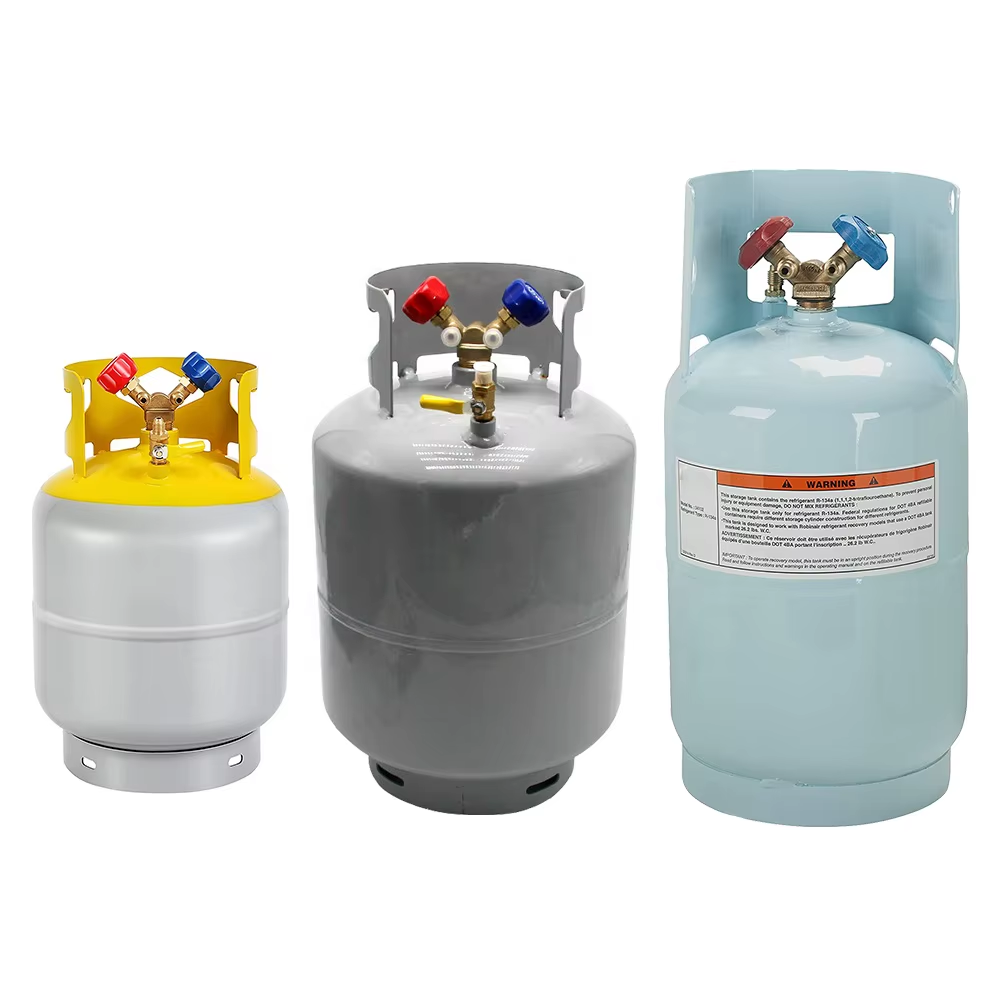
REFRIGERANT FAMILIES – AN OVERVIEW
CFCs (Chlorofluorocarbons)
CFCs have a very high global warming potential, often above 10,000. They were once valued for their stability and thermodynamic properties, but they are ozone-depleting and have been phased out. Only legacy equipment, such as very old air-conditioners, may still contain R12.
HCFCs (Hydrochlorofluorocarbons)
HCFCs have moderate ozone depletion and lower GWP than CFCs, but they are still being withdrawn. R22 was once widely used in residential split systems and has now largely been replaced.
HFCs (Hydrofluorocarbons)
HFCs have no ozone depletion potential, but many have high global warming potential. Refrigerants such as R410A, R404A, R507, and R134a have dominated domestic heat-pump and commercial refrigeration markets.
HFOs (Hydrofluoro-olefins)
HFOs offer very low GWP, often below 10, with good thermodynamic performance. They are increasingly used in automotive AC, heat pumps, and emerging commercial chiller systems.
Natural Refrigerants
Natural refrigerants include CO₂ (R744), ammonia (R717), and hydrocarbons such as R290, R600a, and R601a. They offer ultra-low GWP and zero ozone depletion, but often require specialist safety designs due to flammability or toxicity concerns.
Low-GWP Blends
Low-GWP blends such as R452A, R448A, and R449A are engineered to mimic the performance of high-GWP HFCs while reducing climate impact. They are often used as retrofit solutions for existing commercial refrigeration equipment.
Key takeaway: The UK market is moving decisively away from CFCs and HCFCs, embracing low-GWP HFCs, HFOs, and natural refrigerants. The choice of refrigerant is now dictated not just by thermodynamic efficiency but also by legal GWP limits and operational safety requirements.
DOMESTIC REFRIGERATION – WHAT YOU’LL FIND IN A TYPICAL UK HOME
Residential Air-Source Heat Pumps
The current dominant refrigerants are R410A and, increasingly, R32. R32 offers higher energy efficiency and a lower GWP, aligning with the UK’s phase-down targets. ACL London audits existing heat-pump systems, advises on retrofits to R32 or HFO-based models, and supports the paperwork required under REF-Com for refrigerant change-over.
Domestic Refrigerators & Freezers
Most freestanding fridges now use R600a, also known as isobutane, while some integrated freezer units may still use R134a. R600a has a very low GWP and has become the default choice for many new domestic appliances.
Emerging Technologies
Smart heat-pump water heaters are increasingly using refrigerants such as R1234ze(E) and low-charge CO₂ transcritical cycles. With the UK’s net-zero target, these systems are expected to become more common.
COMMERCIAL REFRIGERATION – FROM SUPERMARKETS TO INDUSTRIAL CHILLERS
Supermarket Refrigeration
Display cases and walk-in coolers commonly use R290 or R448A. R290 offers excellent thermodynamic performance for low-temperature applications, while R448A provides a non-flammable alternative for larger charge volumes.
Transcritical CO₂ Chillers
R744, or CO₂, has a GWP of 1 and is increasingly used in supermarket systems. It is becoming a preferred option for new builds as it supports the UK’s HFC phase-down goals.
Food-Service & Hospitality
Typical refrigerants include R290 for small-capacity under-counter units and R452A for medium-capacity walk-in freezers. ACL London provides on-site training for staff handling flammable refrigerants.
Industrial Cooling & Process Refrigeration
Ammonia remains popular for large-scale, high-capacity systems because it has zero GWP and strong energy efficiency. CO₂ and HFO blends are also used in specific medium and large-scale applications.
Data-Center & Server-Room Cooling
Emerging refrigerants include R1234yf and low-charge CO₂. Green-IT initiatives are pushing data centres toward refrigerants that minimise climate impact while maintaining precise cooling control.
THE UK REF-COM REFRIGERANT COMPLIANCE FRAMEWORK
What Is REF-Com?
REF-Com is the UK’s refrigerant compliance framework, translating F-Gas rules into domestic refrigerant management obligations. Its core aims are to phase down high-GWP fluorinated gases, control refrigerant sales and use, and ensure proper training, record-keeping, and leak detection.
Section 6
This covers small-capacity appliances with refrigerant charges of 5 kg or less. No licensing is required, but manufacturers must certify compliance and end-users must keep a product register.
Section 7
This covers larger commercial and industrial equipment above 5 kg. It requires refrigerant handling licensing, leak-testing reports, and equipment registration.
Section 8 – Fluorinated Gas Reporting
This applies to entities that manufacture, import, or place refrigerants on the market. Annual F-Gas data must be submitted and omissions can lead to penalties.
PHASE-DOWN TARGETS, TRAINING, AND LEAK DETECTION
Phase-Down Targets
The UK refrigerant market continues to reduce the permitted stock of high-GWP HFCs. The reduction path moves from 100% baseline in 2020 to 68% in 2023, 44% in 2026, 18% in 2030, and 5% by 2035.
Competency & Training
The REF-Com regime requires anyone handling larger refrigerant charges to hold qualifying certification, such as F-Gas handling training. Flammable natural refrigerants require additional safety knowledge and suitable procedures.
Record-Keeping
Every system above 5 kg requires an up-to-date equipment register including make, model, refrigerant type, charge amount, and location.
Leak Detection
Systems above 50 kg require annual leak detection, while systems between 5 and 50 kg require checks every two years. Non-compliance can lead to notices, remedial actions, and shutdowns.
CHOOSING THE RIGHT REFRIGERANT
Determine the Application Size & Temperature Range
Low-temperature systems may suit CO₂ for large chillers or R448A for medium-sized walk-ins. Medium-temperature systems may suit R290 or R32 depending on safety constraints.
Assess Safety Constraints
If the installation environment cannot accommodate flammable A3 refrigerants, low-GWP HFO blends may be more suitable. For high-capacity industrial plants, ammonia remains highly effective when proper detection and ventilation are in place.
Check Regulatory Limits
Charge sizes above 5 kg trigger licensing and leak-testing obligations. The refrigerant selected should support the building’s GWP inventory for the next 5–10 years.
Calculate Lifecycle Cost
The right choice is not always the lowest upfront cost. Energy efficiency, refrigerant charge size, maintenance, training, and compliance should all be considered together.
FUTURE OUTLOOK – WHAT’S NEXT FOR UK REFRIGERATION?
Accelerated CO₂ Adoption
Government incentives and carbon-reduction pressure are making CO₂ a more common choice for large-scale refrigeration.
HFO-Dominated Heat-Pump Market
By 2030, more residential heat-pump systems are expected to use R32 or R1234ze(E), driven by regulation and lower-GWP priorities.
Digital Leak Detection
IoT-enabled sensors will make continuous monitoring easier and reduce the reporting burden for facility managers.
Regulatory Tightening
The UK market is expected to continue tightening refrigerant rules, especially around the maximum GWP allowed in new systems.
HOW ACL LONDON CAN HELP YOU NAVIGATE THE REFRIGERANT TRANSITION
Regulatory Audits
Comprehensive gap analysis against REF-Com requirements helps avoid fines and licence issues.
System Design & Retrofit
ACL London can support custom engineering solutions using low-GWP refrigerants such as CO₂, HFOs, and hydrocarbons.
Training & Competency
Technician training and natural-refrigerant safety guidance help businesses meet legal competency requirements.
Leak Detection & Monitoring
Smart sensors, annual testing schedules, and automated reporting can simplify compliance and reduce emissions.
Lifecycle Cost Modelling
Detailed ROI calculations help building owners compare energy savings, refrigerant reductions, and long-term carbon benefits.
Contact us today to schedule a free preliminary consultation. Let ACL London be your trusted partner as the UK moves toward a climate-neutral refrigeration future.
CLOSING THOUGHTS
The UK’s refrigerant market is undergoing a profound transformation. From the humble domestic freezer to the sprawling supermarket chill-room, the choice of refrigerant now intertwines thermodynamic performance, safety, and strict regulatory compliance.
Understanding the different refrigerant families, their appropriate applications, and the obligations under the REF-Com framework is essential for anyone involved in the design, installation, or operation of cooling systems.
By staying ahead of the phase-down schedule, investing in low-GWP technologies, and partnering with a specialist like ACL London, businesses can avoid penalties, lower operating costs, enhance brand reputation, and contribute toward the UK’s net-zero ambition.