
ACL Air Conditioning’s “Clean Cool” Initiative & Bacteria advise
By James Sal
When a Summer Heatwave Becomes a Public-Health Threat
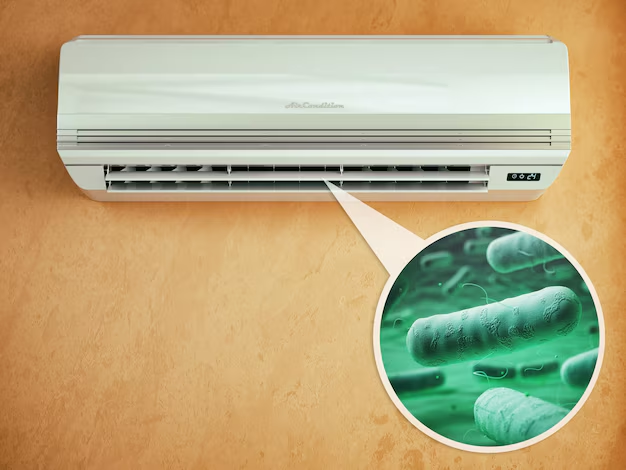
London’s streets are sweltering. The thermometer in Trafalgar Square nudged past 30 °C (86 °F) last week, and humidity levels are climbing to record highs. While most of us reached for a cold drink or a fan, a hidden danger was silently gathering strength inside the very machines that keep us comfortable: Legionella bacteria.
First identified after a 1976 outbreak at an American Legion convention, Legionella is the culprit behind Legionnaire’s disease—a severe pneumonia that can be fatal for the elderly, infants, pregnant women, and anyone with a weakened immune system. In the UK, cases have surged 48 % over the past three years, and the concentration is highest in dense urban areas where aging cooling-tower infrastructure meets soaring temperatures.
Enter ACL Air Conditioning London, the nation’s leading provider of Air-Conditioning Service and Refrigeration Service. On March 11, 2026, the company announced a bold, city-wide response: the “Clean Cool” Initiative. It’s a free-of-charge, rapid-deployment programme that pairs technical fixes with a public-education campaign—aimed at protecting Londoners from both heat and disease.
A HIDDEN RISK INSIDE COOLING SYSTEMS
This initiative focuses on the relationship between cooling systems, stagnant water, rising heat, and public health. The goal is to help Londoners understand how proper air conditioning maintenance, refrigeration service, and system checks can reduce risk during increasingly hot summers.
WHY THE URGENCY NOW? CLIMATE, INEQUALITY, AND A GROWING PATHOGEN
Rising Temperatures: Warm, stagnant water in cooling towers is a perfect breeding ground for Legionella.
Aging Infrastructure: Many council estates and low-income blocks still run on outdated HVAC systems lacking modern antimicrobial safeguards.
Health Disparities: The most vulnerable—elderly residents, children, and immunocompromised patients—live in the buildings most at risk.
Economic Pressure: Families facing a potential outbreak often have to choose between costly temporary housing and staying in an unsafe home.
“Legionella is a silent reminder that climate change is not a distant threat—it’s already in our homes, schools, and workplaces, and it hits hardest where resources are thin.”
INSIDE THE CLEAN COOL INITIATIVE: WHAT ACL IS DOING
ACL’s Clean Cool Initiative combines technical inspections, rapid repairs, public-health education, and strategic partnerships to help reduce risks linked to contaminated cooling systems.
Free Cooling-Tower Audits
Free Cooling-Tower Audits (Starting 15 March)
Thermal Imaging: Technicians map hotspots where water could be stagnating.
On-Site Sampling & PCR Testing: Water from towers, condensate lines, and drip pans is cultured and analysed, delivering results within 24 hours.
“Clean Cool Report”: Property managers receive a clear, actionable summary with contamination levels, remedial steps, and compliance timelines.
Rapid Repairs & Upgrades for High-Risk Housing
Rapid, No-Cost Repairs & Upgrades for High-Risk Housing
Hyper-Chlorination Flush: EPA-approved disinfectant cycles eradicate bacterial colonies.
Continuous Water-Treatment Systems: Installed to keep a residual disinfectant level, preventing re-contamination.
Copper-Alloy Heat Exchangers & UV Modules: New components resist biofilm formation and provide ongoing microbial monitoring.
“Our cooling towers are the lungs of the city,” says James Patel, COO of ACL Air Conditioning London. “When they become contaminated, the air we all breathe is compromised. This summer, we’re turning our expertise into a public-health shield.”
Comprehensive Refrigeration Service for Commercial Premises
Comprehensive Refrigeration Service for Commercial Premises
Condensate Drainage Checks: Blockages that could hold standing water are cleared.
Food-Grade Hydrogen-Peroxide Sanitisation: Safe for food-handling environments.
Drip-Tray Heating Elements: Keep surfaces dry, making them inhospitable to microbes.
Breathe Easy, Stay Informed
“Breathe Easy, Stay Informed” – A City-Wide Education Campaign
Multimedia Outreach: Posters in Underground stations, QR-coded video tutorials in community centres, and targeted social-media ads.
Key Messages: Recognising Legionnaire’s symptoms, when to seek medical help, and simple household practices (e.g., cleaning portable AC units, avoiding stagnant water in humidifiers).
Dedicated Hotline: ACL provides real-time guidance and connects callers with local support services.
Strategic Partnerships
Strategic Partnerships
ACL has signed a Memorandum of Understanding (MoU) with:
- London Public Health Partnership (LPHP)
- British Lung Foundation
- Charity Climate Justice London
Together they will:
- Share anonymised data on Legionella prevalence across boroughs.
- Coordinate targeted vaccination drives where appropriate.
- Fund scholarships for students pursuing environmental microbiology and sustainable HVAC design.
Human Stories Behind the Numbers
A Mother’s Fear, a Daughter’s Hope
“I was terrified,” recalls Maria Fernandes, a single mother living in a Harlem-style tower on Hackney Road. Her 8-year-old son Luca, who has asthma, received a warning about a possible Legionella outbreak in July 2025. “I thought the only way to protect my children was to leave, but we can’t afford that.”
Within 48 hours, ACL’s technicians arrived. They performed a full tower flush, installed a continuous treatment system, and inspected the building’s communal refrigerators. The result? No trace of Legionella and a relieved family. Today, Luca is back on the football pitch, and Maria volunteers as a Clean Cool community ambassador, encouraging neighbours to demand proper maintenance.
Stories like Maria’s highlight why Clean Cool is more than a technical fix—it’s a lifeline for families who would otherwise be forced to choose between health and shelter.
Why It Matters to Every Londoner
Air Quality: Even if you live in a building without a tower, aerosolised Legionella can travel through shared ventilation ducts.
Workplace Safety: Offices, schools, and gyms often rely on central HVAC systems. A contaminated tower can affect hundreds of workers and students.
Community Resilience: By reducing disease incidence, the initiative eases pressure on NHS hospitals—especially critical during heat-related spikes in emergency admissions.
How You Can Help
Know the Signs – Fever, chills, cough, shortness of breath, muscle aches (symptoms appear 2–10 days after exposure). Seek medical help promptly, especially if you belong to a vulnerable group.
Check Your Environment – If you manage a building, request a “Clean Cool” audit. If you’re a tenant, ask your landlord about recent HVAC maintenance.
Spread the Word – Share our phoneline and the campaign’s QR-coded videos on social media.
Support Local NGOs – Donate or volunteer with Climate Justice London, the British Lung Foundation, or community groups focused on housing safety.
Stay Cool, Stay Safe – Use fans, keep windows open in the early morning/evening, and avoid over-humidifying indoor spaces.
Looking Ahead: A Blueprint for Other Cities
London’s proactive stance could serve as a template for metropolises worldwide facing the twin threats of climate change and aging infrastructure. By coupling free technical interventions with public education and cross-sector partnerships, ACL’s “Clean Cool” model shows that private expertise can be leveraged for public good.
If you’re a city official, a property manager, or a resident who cares about healthier, cooler urban living, keep an eye on how this initiative evolves. The data, lessons learned, and community feedback will shape the next generation of climate-smart, disease-resilient cooling solutions.