

CONDENSATION PUMPS
Introduction – The Hidden Waterworks Behind Every Cool Breeze
When you step into a comfortably cool office or retreat to a chilled bedroom on a sweltering summer day, the first thing you notice is the refreshing air. What you rarely see—or think about—is the Refrigeration condensate pump quietly doing its job in the background.
Most homeowners and even many commercial building managers are familiar with the main components of an air-conditioning (AC) system: the compressor, the evaporator coil, the refrigerant lines, and the thermostat. Yet the condensate pump even for water cooled units, a modest-looking device that often lives in a closet, attic, or rooftop mechanical room, is just as crucial. Without it, the whole system can leak, corrode, and ultimately fail, leading to costly repairs, indoor-air-quality problems, and even structural damage.
In this post we’ll dive deep into:
- What a condensate pump is and how it works
- Why it’s indispensable for both residential and commercial AC units
- Key design considerations and common types
- Installation best practices and maintenance tips
- Real-world scenarios that illustrate its significance
- Future trends and smart-pump innovations
By the end, you’ll understand why a condensate pump deserves a place in your HVAC maintenance checklist, and how to keep it running smoothly for years to come.
THE HIDDEN COMPONENT THAT PROTECTS YOUR HVAC SYSTEM
Condensate pumps quietly protect homes and commercial buildings from leaks, water damage, mold growth, and costly HVAC failures. While they are often overlooked, they are one of the most important support components inside modern air-conditioning systems.
THE BASICS – FROM MOIST AIR TO DRIPPING WATER
Where Does the Water Come From?
Air-conditioners function by removing heat and moisture from indoor air. As warm interior air passes over the cold evaporator coil, the temperature of the air drops below its dew point. Moisture in the air condenses on the coil surface—just like water droplets forming on a cold glass of lemonade. This liquid, called condensate, drips into a pan beneath the coil.
In a perfectly level, gravity-fed system, the condensate simply runs out through a drain line that terminates at a floor drain, a utility sink, or the building’s sewer system. But not every installation can rely on gravity alone.
The Role of the Condensate Pump
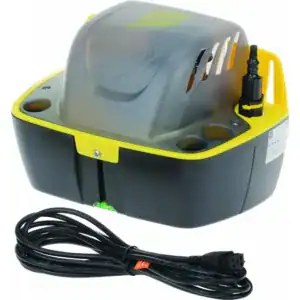
A condensate pump is essentially a small, self-contained water-pumping system that collects condensate from the drain pan and forces it to a remote discharge point—often a lower-lying floor drain, a sewer clean-out, or an exterior location.
Think of it as the “heart” of the AC’s water-removal circuit. When gravity can’t do the job, the condensate pump steps in to keep the water moving.
WHY CONDENSATE PUMPS ARE ESSENTIAL
Preventing Water Damage
Standing water in a drain pan can overflow, soaking ceilings, walls, insulation, and structural wood. A properly functioning condensate pump eliminates this risk by ensuring continuous removal.
Protecting the AC Unit
Excess water can corrode evaporator coils, damage fan motors, and encourage mold growth inside the unit itself.
Maintaining Indoor Air Quality
Condensate is a breeding ground for microorganisms including mold, bacteria, and fungi. If water stagnates, spores can re-enter the air stream and negatively affect occupants.
Compliance with Building Codes
Many building regulations now require proper condensate removal systems for residential and commercial HVAC installations.
Design Flexibility
Condensate pumps allow engineers to install HVAC units in rooftops, ceilings, attics, or remote plant rooms without relying entirely on gravity drainage.
TYPES OF CONDENSATE PUMPS
Submersible (Inline) Pumps
Compact and quiet, these pumps sit directly in the condensate pan and are ideal for residential systems and smaller commercial applications.
Self-Priming Centrifugal Pumps
Designed for larger commercial systems with higher flow requirements and longer vertical lifts.
Sump-Style Pumps
Often used in industrial applications where deep collection basins are required.
Battery-Backed Pumps
Essential in hospitals, data centers, and critical facilities where power loss cannot interrupt condensate removal.
Smart / IoT-Enabled Pumps
Modern pumps now include Wi-Fi or Bluetooth monitoring for predictive maintenance and real-time alerts.
INSTALLATION BEST PRACTICES
Proper Pump Sizing
The pump must be selected according to the system’s condensate flow rate and vertical lift requirements.
Correct Placement
Submersible pumps should remain level and properly submerged to avoid cavitation and premature wear.
Electrical Safety
Most residential installations use a dedicated GFCI-protected electrical circuit. Critical systems should include UPS or battery backup protection.
Drain Line Protection
Adding traps, antimicrobial filters, and UV treatment can reduce algae and mold buildup inside the drainage system.
MAINTENANCE – KEEP THE PUMP PUMPING
Monthly Maintenance
Inspect float switches, tubing, and drain lines for cracks, algae buildup, or mineral deposits.
Quarterly Maintenance
Clean inlet screens, test automatic activation, and verify proper water discharge.
Annual Maintenance
Perform full flow testing, inspect electrical connections, and lubricate bearings where applicable.
Replacement Intervals
Most manufacturers recommend replacing condensate pumps every 3–5 years depending on operating conditions.
REAL-WORLD EXAMPLES
Residential Rooftop Systems
Condensate pumps allow rooftop HVAC systems to safely move water to basement drains without damaging ceilings or walls.
Commercial High-Rise Buildings
Office towers rely heavily on condensate pumps to protect tenants from water intrusion and service interruptions.
Critical Data Centers
Many modern data centers now use dual-pump redundancy with battery backup to guarantee uninterrupted operation.
THE FUTURE OF CONDENSATE MANAGEMENT
IoT Predictive Maintenance
Smart pumps can now monitor flow rates, power consumption, and pump runtime to predict failures before they happen.
Energy-Harvesting Technology
Emerging designs are experimenting with micro-hydro energy recovery systems that slightly reduce power consumption.
Advanced Materials
Carbon-fiber impellers and ceramic bearings are extending pump lifespan in corrosive environments.
Condensate Reuse Systems
Green buildings increasingly recycle condensate water for irrigation and non-potable building applications.
DON’T OVERLOOK THE LITTLE PUMP
While the fan blows cool air and the compressor removes heat, the condensate pump quietly guarantees that the moisture removed from your indoor environment doesn’t become a problem of its own.
By selecting the right pump type, installing it properly, and maintaining it regularly, you can protect your HVAC system, preserve indoor air quality, and avoid costly water damage.
Whether you manage a residential property, commercial office, or industrial facility, understanding condensate pumps is essential for long-term HVAC reliability.